

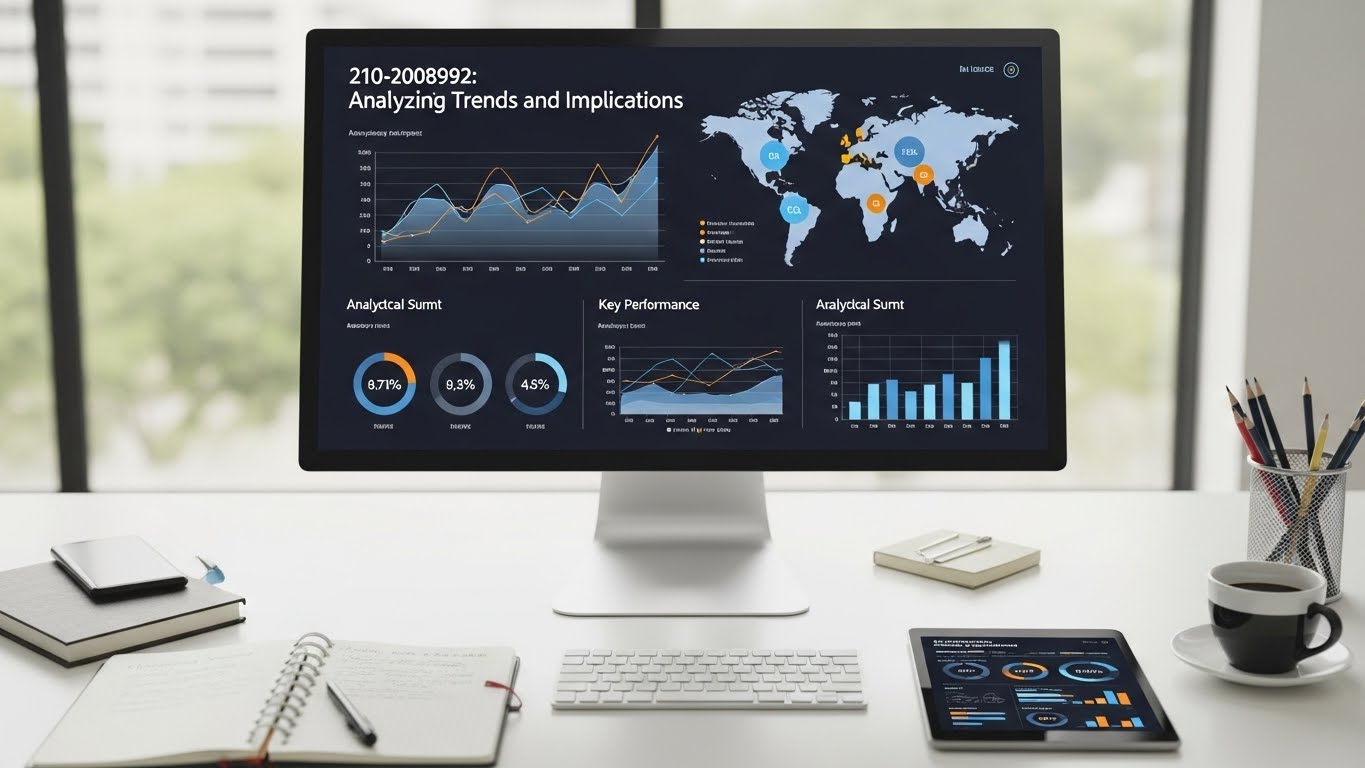
In today’s fast-paced world, understanding the dynamics of change is more crucial than ever. The ability to analyze trends can make or break a business. Enter 210-2008992—a concept that encapsulates the importance of trend analysis in our modern landscape. As industries evolve and consumer behaviors shift, staying ahead means having insights into what lies ahead. This blog post will explore how analyzing trends can guide businesses toward strategic decisions while unveiling potential pitfalls along the way. Whether you’re a seasoned entrepreneur or just starting out, grasping this concept could open doors you never knew existed. Ready to dive deep? Let’s go!
What is 210-2008992?
The term 210-2008992 refers to a specific identifier that has gained attention in various analytical contexts. This code often represents data sets, products, or processes within different industries.
Understanding its significance requires delving into how this designation is utilized. It can be an essential part of tracking market trends and evaluating performance metrics across sectors.
Organizations may use 210-2008992 as a reference point for analysis. It helps teams focus their efforts on particular areas needing scrutiny or improvement.
By analyzing patterns associated with this identifier, businesses gain insights that drive strategic decisions. The implications extend beyond mere identification; they shape the future landscape of operations and planning strategies.
The importance of analyzing trends and implications
Understanding trends is essential in today’s fast-paced environment. By analyzing these patterns, businesses can make informed decisions that drive growth.
Trends provide insights into consumer behavior and market changes. They reveal what customers want and how their preferences evolve over time. Ignoring trends can lead to missed opportunities or costly mistakes.
Moreover, recognizing implications helps organizations strategize effectively. It allows them to anticipate challenges before they arise, enabling proactive measures rather than reactive responses.
Incorporating trend analysis fosters innovation. Companies can identify gaps in the market and develop products that meet emerging needs.
Staying ahead of trends ensures long-term success. Organizations that leverage this knowledge are better equipped to adapt and thrive amid uncertainty.
Understanding the basics: What is trend analysis?
Trend analysis is a method used to evaluate data over time. It helps identify patterns that can forecast future events or behaviors. By examining historical data, businesses can gain insights into market dynamics and consumer preferences.
At its core, trend analysis involves collecting relevant information. This could be sales figures, social media engagement, or economic indicators. Once the data is gathered, it’s analyzed using various statistical techniques.
Visual representation plays a crucial role in this process. Graphs and charts help illustrate changes clearly and make complex data more digestible. With these visuals, stakeholders can easily spot upward or downward trends.
Understanding trend analysis empowers companies to make informed decisions. It reduces uncertainty by providing a clearer picture of what lies ahead. As markets fluctuate rapidly, being proactive rather than reactive becomes essential for long-term success.
Analyzing data: Methods and tools
When it comes to analyzing data, a variety of methods and tools can enhance your insights. Statistical analysis software like R and Python libraries allow for deep dives into complex datasets.
These platforms offer powerful algorithms that help identify trends effectively. Data visualization tools such as Tableau or Power BI bring clarity to raw numbers, making patterns more accessible.
For businesses interested in real-time analytics, cloud-based solutions provide flexibility and scalability. They enable teams to collaborate effortlessly while dissecting vital information.
Machine learning techniques also play an essential role in trend identification. By using predictive modeling, businesses can forecast future behaviors based on historical data trends.
Choosing the right method depends on specific goals and the nature of the dataset involved. With numerous options available, organizations must align their analytical approaches with their strategic objectives for maximum impact.
Identifying patterns and predicting future trends
Identifying patterns is the cornerstone of trend analysis. It involves sifting through vast amounts of data to discover recurring themes and behaviors. By observing these trends over time, businesses can gain insights into consumer preferences, market dynamics, and emerging opportunities.
Predicting future trends takes this a step further. Using historical data as a foundation, analysts employ statistical methods and predictive modeling to forecast what lies ahead. This proactive approach allows organizations to adapt strategies before shifts occur.
Technology plays a crucial role in this process. Advanced algorithms and machine learning tools enhance accuracy in identifying subtle patterns that might otherwise be overlooked.
As industries evolve rapidly, staying ahead requires agility in adapting predictions into actionable plans. Embracing change while leveraging past data ensures companies remain competitive in an ever-shifting landscape.
Implications of trend analysis in various industries
Trend analysis plays a pivotal role across diverse industries. In retail, it helps businesses understand consumer behavior and inventory demands. By examining purchasing patterns, retailers can optimize stock levels and improve customer satisfaction.
In finance, trend analysis is essential for assessing market movements. Investors rely on historical data to make informed decisions about stocks and assets. It enables them to anticipate shifts in the economy.
Healthcare also benefits significantly from trend analysis. By tracking disease outbreaks or treatment efficacy over time, healthcare professionals can allocate resources more efficiently and enhance patient care.
Manufacturing uses trend analysis to streamline operations. Identifying production bottlenecks allows companies to increase efficiency and reduce costs.
Each industry harnesses the power of trend analysis differently, yet all share a common goal: making strategic choices that foster growth and resilience in an ever-evolving landscape.
Case studies: Successful implementation of trend analysis
One notable case study comes from the fashion industry. A leading apparel brand utilized trend analysis to refine its product line. By examining social media activity and purchase history, they identified emerging styles before their competitors. This proactive approach led to a significant increase in sales.
In the tech sector, another company leveraged trend analysis for product development. They analyzed user feedback and market trends to create features that truly resonated with consumers. As a result, customer satisfaction soared, and their market share expanded rapidly.
Healthcare is not left out either. A hospital used trend analysis on patient data to enhance service delivery. By identifying peak admission times and common health issues, they streamlined operations and improved patient outcomes significantly.
These examples illustrate how effective implementation of trend analysis can drive success across various industries by informing strategic decisions with timely insights.
Challenges and limitations of trend analysis
Trend analysis, while valuable, 210-2008992 is not without its challenges. One significant hurdle is data accuracy. Inaccurate or outdated information can lead to misguided conclusions.
Another limitation lies in the dynamic nature of markets. Trends can shift rapidly due to unforeseen events, making past data less relevant for future predictions. Businesses may find themselves relying on trends that no longer apply.
Additionally, there’s the risk of overgeneralization. Analysts may see patterns where none exist or misinterpret fluctuations as significant trends when they are merely noise in the data.
Resource constraints also play a role. Small businesses might lack access to sophisticated analytics tools and expertise, limiting their ability to conduct thorough trend analyses effectively.
Reliance on historical trends can create blind spots for emerging shifts that don’t fit established patterns. This could lead companies to miss new opportunities or threats lurking just beyond their usual scope of analysis.
Future outlook for trend analysis
The future of trend analysis is poised for significant evolution. With advancements in artificial intelligence and machine learning, data interpretation will become more sophisticated. These technologies can sift through vast datasets rapidly, uncovering insights that were previously hidden.
Moreover, the integration of real-time analytics tools will empower businesses to react instantly to emerging patterns. Companies no longer need to wait weeks or months for reports; they can make informed decisions on-the-fly.
As consumer behavior becomes increasingly complex, personalized predictions will gain traction. Organizations that harness these capabilities effectively are likely to outperform their competitors.
Furthermore, we may see an expansion into new industries embracing trend analysis. From healthcare to finance, the potential applications are limitless as organizations recognize its value in strategic planning and risk management.
Embracing this shift could redefine how businesses operate in a fast-paced world where staying ahead means adapting quickly and intelligently.
Why trend analysis is crucial for business success
Trend analysis is essential for navigating today’s competitive landscape. Businesses that leverage this approach can identify shifts in consumer behavior, 210-2008992 market demands, and emerging technologies.
Understanding these trends allows organizations to adapt their strategies proactively. This adaptability fosters innovation and helps companies stay ahead of competitors.
Moreover, trend analysis aids in risk management. By recognizing potential downturns or challenges early on, businesses can pivot effectively to mitigate adverse impacts.
In addition, it enhances decision-making processes. Data-driven insights empower leaders to make informed choices based on current market conditions rather than relying solely on intuition.
The ability to predict future trends ensures that businesses not only survive but thrive in a constantly evolving marketplace.
Conclusion
The significance of analyzing trends, particularly through the lens of 210-2008992, cannot be overstated. Companies that leverage trend analysis unlock insights that drive strategic decision-making and foster growth. By understanding patterns within their data, businesses can anticipate shifts in consumer behavior or market conditions.
Trend analysis is more than just a tool; it’s an essential practice for staying competitive in today’s fast-paced environment. Various industries—from retail to technology—benefit from these insights, leading to successful outcomes such as increased sales and enhanced customer experiences.
However, challenges exist. Data quality and interpretation hurdles must be navigated carefully to ensure accuracy. As we look ahead, advancements in technology will likely simplify these processes while expanding the scope of what can be analyzed.
Businesses must prioritize mastering trend analysis to thrive now and in the future. Embracing this practice not only informs better choices but also positions companies at the forefront of innovation and adaptation within their sectors.